- What is Botox?
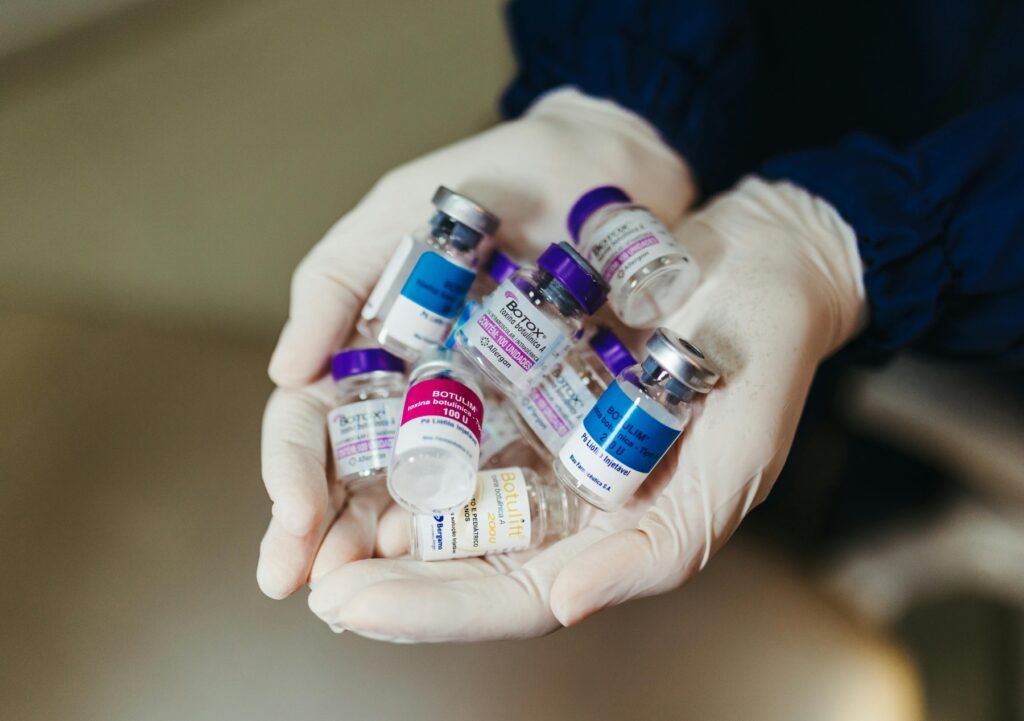
Botox is a brand name for a purified form of botulinum toxin type A, a neurotoxin that temporarily paralyzes muscles. It is commonly used for cosmetic purposes to reduce the appearance of fine lines and wrinkles, and also for various medical conditions.
- How does Botox work?
Botox works by blocking nerve signals to the muscles, causing them to relax. This softens and reduces the appearance of wrinkles, especially those caused by facial expressions such as frowning, squinting, or raising the eyebrows.
- Does Botox hurt?
Most patients report only mild discomfort, often described as a small pinch. Some providers may apply a topical numbing cream to minimize discomfort.
- Will I look “frozen” or unnatural?
Not if it’s done correctly. When administered in the right dosage by a skilled professional, Botox softens wrinkles while preserving your natural expressions.
- What areas can be treated with Botox?
Common cosmetic areas include:
- Forehead lines
- Frown lines (between the eyebrows)
- Crow’s feet (around the eyes)
- Bunny lines (sides of the nose)
- Chin dimpling
- Jawline slimming (masseter muscles)
Botox is also used medically for migraines, excessive sweating (hyperhidrosis), muscle spasms, and overactive bladder.
- Will Botox stop my wrinkles from forming?
Botox can help prevent new wrinkles from forming by temporarily relaxing the muscles responsible for expression lines. When these muscles are less active, the skin doesn’t crease as much — which reduces the development of fine lines over time. While it doesn’t stop aging altogether, regular Botox treatments can slow down the formation of deeper wrinkles and help maintain smoother skin in the long term.
- Do your muscles get dependent on Botox?
No, Botox does not cause physical dependence in your muscles. It’s a common myth that stopping Botox makes wrinkles come back worse — but that’s not true. They may feel more noticeable simply because you’ve become used to smoother skin, but your face will return to its natural state.
- When will I notice results from my Botox treatment?
Most people begin to notice results within 3 to 5 days after their Botox injections. However, it can take up to 2 weeks to see the full effect, as the muscle relaxation gradually sets in.
Results may appear a bit faster for some areas (like crow’s feet) and slower for others (like the forehead), depending on how your body responds.
- How long do the effects last?
The effects of Botox usually last 3 to 4 months, though this can vary depending on the individual, the area treated, and dosage.
- When should I start getting Botox?
There’s no one-size-fits-all age to start Botox — it really depends on your goals and your skin.
Most patients start in the 25 to 55 years of age.
- Who should not get Botox?
Botox is not recommended for:
- Pregnant or breastfeeding women
- People with neuromuscular disorders
- Individuals allergic to any of its ingredients
Always consult your provider about your medical history before getting Botox.
- Can Botox be combined with other treatments?
Yes. Botox is often combined with fillers, chemical peels, laser treatments, and skincare routines for comprehensive facial rejuvenation. Your provider can customize a treatment plan for your needs.
References
1.Frequently Asked Questions About Botox. (2025). Internal report, ZEVANEX PHARMACEUTICAL10 FREQUENTLY ASKED QUESTION’SB…
3.Carruthers, J., & Carruthers, A. (2017). Botulinum toxin: Pharmacology and clinical use in aesthetic medicine. Journal of Drugs in Dermatology, 16(1), 45–52.
4.Satriyasa, B. K. (2019). Botulinum toxin (Botox): Mechanism of action, clinical applications, and safety profile. Clinical, Cosmetic and Investigational Dermatology, 12, 223–228.
5.Naumann, M., & Jankovic, J. (2018). Safety of botulinum toxin type A: A systematic review and meta-analysis. Current Medical Research and Opinion, 34(5), 981–990.
6.Hexsel, D., & Dal’Forno, T. (2019). Cosmetic use of botulinum toxin type A in facial aesthetics: Indications, outcomes, and patient selection. Aesthetic Surgery Journal, 39(S1), S24–S36.
7.Dressler, D., & Adib Saberi, F. (2017). Botulinum toxin therapy: Overview and critical appraisal. Journal of Neural Transmission, 124(8), 949–956.
8.Kane, M. A., Monheit, G. D., & Cox, S. E. (2020). Botulinum toxins in clinical practice: Safety, efficacy, and evolving applications. Plastic and Reconstructive Surgery, 145(6), 1048e–1059e.